Table of Contents
25th of August, 2025
At the time I write this, I am 25 years old, and I have voted only once. The last time a ballot was of any deep interest to me was the Brexit Referendum, but I was not old enough to vote in that. Since then, with the exception of I think a local council election, where to my memory I spoiled the ballot, I have never voted at all.
This post is to explore the idea of whether or not one should vote in elections. I write it because in my own life, my choice not to vote receives frequent criticism from the older members of my family who are sometimes very forward in their view that I should vote, and my not doing so is viewed with some disapproval. My first sentiment about this is that it is irritating, but at the passing of that reaction, I also feel that it is wrong.
Here’s why I don’t vote in elections, and why I think that still means something.
Context About Me, Politically:
This isn’t where I disappoint you by espousing ideas you’d never agree with – I’ll save that for other posts confined to the issues they’re written about as far as possible – but this is just for me to give some context about my engagement with politics – not my political views themselves.
I am politically engaged. Not the most engaged it is possible to be; I don’t spend every waking hour obsessing over every issue out there – that would be miserable as much as it would be unnecessary. But I am not – generally – unaware of the political hum that forms the backdrop of all our lives.
Indeed, in some ways, I do even engage actively in politics. I write posts like this, and write letters to MPs, and debate with friends and strangers over political issues every so often too, where I am very reliably not thanked because I often don’t agree with them, nor they with me!
The reason I lay this out is not an exercise in self-aggrandisement, but to note at least an earnest engagement with politics, and in this perhaps to amplify two points: firstly, why I find it irritating being scorned for not voting, and secondly (mostly) to make the point that I am not apathetic or disengaged, or even nihilist in the sense of ‘what’s the point, it’s all rigged anyway’.
If You Don’t Vote, You Have No Right to Complain
This might be one of the oldest, and most tired lines that any of us as heard about whether or not one votes.
The logic that sustains this idea is backwards against how we reason other things in life. It’s as absurd to me as suggesting that because I didn’t engage with cooking classes at school, I have no right to complain when I get a terrible meal in a restaurant. Or perhaps because I didn’t engage with the study of medicine, I have no right to complain when a doctor makes an error and causes me, or someone else to become more ill as a result.
Particularly too because my not learning about food does not make me immune from food poisoning. There is no need to demand my participation in order for the consequences of the professionals making mistakes to materialise very real consequences for me, and for my commentary on that to be valid. Further, that commentary is not just valid as criticism but also as prescription. I can fairly say both “the meat was not cooked properly” as a critique, and that “the meat should have been cooked until it wasn’t raw” as a prescription, and neither suffer a loss of validity just because I do not engage with cooking. Not only is participation not a pre-requisite for complaint, neither is it for prescription.
I reject the notion that ‘if you don’t vote you have no right to complain’ about the state of government. Implicitly, anyone who holds this view demands my participation as a condition for the validity of my opinion – something I further oppose because it ventures to exert a control over me that I will not permit them to have. I think this stance that participation is required is foolish and indefensible, morally and rationally.
I think that if we are going to accept democracy as our governmental system of choice (and I have my issues with this, but I’ll save it for another post), participation in it must be optional, and choosing abstention does not vitiate the right to complain.
Democracies That Force Their Citizens to Vote:
This may surprise some of you – it surprised me when I first learned of it – but there are some countries where you have to vote and can be fined for not doing so. Australia has had compulsory voting laws for about a century and it’s also required in Belgium, too. These are the only two examples I know of but there may be more.
I have deep misgivings about this. My first objection is that I don’t think forcing everyone to vote does anything good for the integrity of elections. It’s not a stretch of imagination to suppose, I don’t think, that there will be a significant number of people who just tick any old box to get it over with, and this I think actually undermines the legitimacy of the election more than if those people had not voted. If this doesn’t sound convincing, or seems to speculative, nonchalant engagement just because one is forced to is frequently raised as a legitimate criticism of juries and the safety of their verdicts, so I’d insist the idea isn’t without merit.
I think that a democracy that demands everyone votes immediately sacrifices a degree legitimacy in part also because it violates the sovereignty of its citizens. The above argument was consequential – that forcing people to vote is bad because they may not care, and that may undermine election legitimacy. But this is also an issue of intent, because a state that forces you to vote implicitly violates your freedom by so doing, in my view.
It would be like me forcing you to play chess but giving you freedom (within the rules) to move your pieces however you liked. What kind of freedom is that? Is being punished for not playing chess somehow acceptable because you aren’t told which pieces you have to play – only that you have to play them? The choice to say “I don’t want to play chess” is where freedom begins, not in the choice whether or not I move a pawn or a rook first.
It also loses legitimacy because vast swathes of people won’t have a clue what they’re voting for. Tangentially related to my first critique, this is an issue not of apathy but of ignorance, which we all agree is a frequent thorn in the side of sensible political discourse, even if we don’t all agree on who the idiots are.
I reject the idea that numerically superior engagement with a system legitimises it at all. For me, intellectual and moral superiority do. The vote of two moral and intelligent citizens is worth significantly more in my view than the vote of a dozen scoundrels or fools.
Lastly, I don’t vote because that is my statement. I reject the options on the menu because I either believe all of them are bad, or not good enough, and I don’t want to partake in the act of legitimising those whose abysmal authority I have no wish to consent to or live under.
Soldiers Died For Your Right to Vote
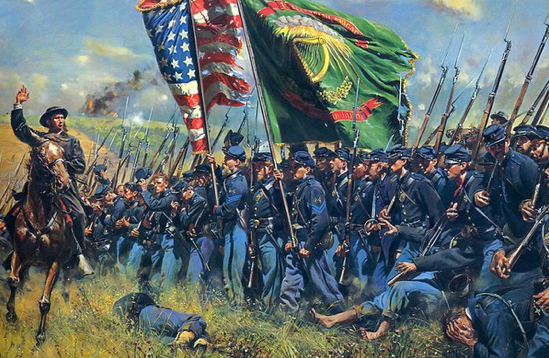
A very common contention in my own social circles, usually again from people older than me, is that soldiers died for my right to vote and by not voting, I fail to honour that. I think this is a bit of an insidious argument to be honest, in part because when I was younger it was very effective. I grew up with a very deep respect for veterans – past, and present – and so to be seen to affront their legacies is not something I’d ever wish to do.
But I think this argument is the greater insult than my conduct. Those soldiers died for my freedom. They died to preserve democracy. Innate and inseparable from the very idea of democracy is that of choice and by having the freedom to make that choice, their sacrifice is honoured.
Their argument would not work in any other context. If we use Chess as an analogy again, nobody is going to the frontline to fight the ‘Anti-Chess’ people in order to force me to play Chess. They’re going to the frontline to preserve Chess, so it is not destroyed, and by way of doing that, to allow those who want to, to play chess, and those who do not want to, to choose not to.
You are not free if you cannot choose to say no.
The Suffragists and Suffragettes, and Women’s Voting Rights:
The same argument as soldiers dying for the right to vote is often leveraged from the angle of women’s suffrage, too. The logic is clear and obvious, I think, in that the right to vote was not had until it was fought for and hard won, but I think the same dismissal is appropriate as with the soldiers.
Although it is worth noting in the Suffragettes’ time the majority of men couldn’t vote either, this sidesteps the real issue in the argument. The fight was for the right, not for a duty. The efforts of the Suffragists and Suffragettes are not honoured by the removal of choice about whether to vote. The freedom of choice they fought for was the privilege of being able to vote, and not the burden of having to do so. Whether or not one then chooses to vote or abstain is a private affair for the dictates of their own conscience, because you are still not free if you cannot choose to say no.
We’re Confusing Rights and Duties Again:
A constant bugbear of mine (one of many) in the modern age is that we have lost our heads over what constitutes a right and what is a duty, and both the soldier and the suffrage arguments epitomise one example where people frequently make that error. I will write a full essay on this – it’s in draft as I make this one about voting – but in short a right is a privilege that is conferred upon you. It doesn’t compel you to do anything. It gives you freedom to. A duty is a negative burden placed against you, that forces you to act in some way.
Both the ‘Soldiers Died For You’ and ‘Women Fought For You’ arguments are logically the same, and both make the same mistake – they fail to correctly distinguish between the nature of a right and a duty. Neither fought, suffered, or died in order to exert force against you to vote. They fought, suffered, and died to exert force against those who would not let you vote, so that you then could. They fought for your rights.
Abstention is Not Apathy, or Idleness – It’s a Statement
When you go into a shop that only sells things you don’t want, you make no purchase. It is absurd at every level of analysis to suggest that because you walked into the shop, some part of you is dutybound – perhaps even morally bound – to buy something.
The choice not to buy something is not apathy, or idleness – there is no sense of ‘I couldn’t be bothered’ about it. The driving force is that it is a decision that you took because you looked at what was on offer and decided that you didn’t want any of it. The strength of that conviction may vary from “nothing here interests me” to “this shop is absolutely full of the nastiest rubbish I’ve ever seen” and perhaps some expletives to follow, but neither one is a statement of apathy.
I could tip this analogy further in my favour too with the role the shop plays in this. If we assume it is meant to be an analogy for the country at large, and not just the voting booth, that ‘shop’ was not something we chose to be in. It was built around us, by people who then have to get our approval in order to govern us. It’s strange enough, don’t you think, that one could be stood in an open space and have a shop built around them without their involvement or assent, but wouldn’t it be so much stranger – even a bit dystopian – if you were then forced to buy something from it too?
Spare us what little dignity the system still affords, and let us at least walk around unamused, with the freedom to choose not to waste a limited currency on something we don’t want.
I do this at the ballot box.
When nobody buys anything from that shop, it will eventually get the message that it needs to change what it sells to appeal to people. If it doesn’t, it fails.
Ah, but it doesn’t work like that in government, does it? And you felt that too.
I have coherently defended my moral right (and reasons) not to vote but it leaves a sticking point that I can’t solve – the system doesn’t respond to my silence, and this will ring out for some people who may retort along the lines that my ideas don’t work in practise, because if everyone did this we’d be in a very poor way indeed.
Silence & Power: There is No Protest, Only Permission:
Perhaps one of the reasons that protests are so often noisy to the point of irritation is because they have realised a sad truth about the nature of political power: it doesn’t respond to silence.
People sometimes suggest spoiling ballots in the UK as the ‘official’ way to protest vote but this doesn’t have any real effect as it is not included in the vote count. Not always, anyway.
There is an interesting game going on here with the nature of positive versus negative action, by which I mean that a positive action is something actively done and a negative action is something not done – an omission. These are not emotional terms in this context.
To cast a vote is a positive act because it involves you putting pen to paper and marking against the candidate you want. A negative act is my course: don’t vote. Spoiling, though, is at an interesting cross section, because it is a positive act (you deface the ballot paper) but with all the weight of a negative act. Not only, then, does disengagement go ignored, but active disengagement also goes ignored.
Authority doesn’t interpret silence. At all.
Democracies are fundamentally sustained through conflict, not co-operation. It is necessary by design of the system that at least “many”, if not all people, go out and cast votes for opposing parties who compete with each other for electoral capital, winning them seats and legislative impetus. Even in a healthy democracy, if no citizen voted in an election the system would not do as a shop would, and change the offers so that it could actually sell something. It would interpret that as complete assent because of the absence of opposition. If nobody voted, it would not protest the party in power, but in fact secure their absolute power for the next election cycle.
Power sees Silence as Permission, and the absence of Opposition is Complete Assent.
So How Does Your Not Voting Still Mean Something?
I would seem to have talked myself into a trap here where I can justify the moral and legal right not to vote, but have to acknowledge even against myself that it has very little effect – if any at all – on the way I am governed. Some may see that I am wasting an opportunity, or worse – those in particular of the inclination that I do not share to chant ‘silence is violence’ may even argue I am actually complicit in the terrible way we are governed.
I don’t share this view because I am a legal mind before an activist one, and in law where there is no duty to act, omission is not an offence. I think this is perfectly fair and reasonable. We can, and do often compel people not to do things – most criminal law is prohibitive against certain conduct (such as don’t murder and don’t steal), but we much more rarely pass laws that force people to positively do something, because that is onerous. Such burdens often arise out of a duty of care, such as for example the legal burden on a landowner to see that his land is reasonably safe for visitors, or that which falls on parents to feed, clothe, and care for their children.
The reason I raise this is because I do not owe a duty of care to society at large. There is no legal or moral basis on which to compel me to vote. Therefore I view my abstention not as a dereliction of duty, but as a discerning choice. A choice that I am free to make, in the nature of democracy.
So, why does it still mean something? Because non-participation is a statement, really, even if the people it’s aimed at don’t listen. The choice to be vegetarian (or vegan) amplifies this, I think. Eating meat, like voting, is an activity that is not compelled but widely engaged in, and for which there’s widespread nearing absolute acceptance at the social and political level. But some people’s private ethics compel them to abstain from the practise because of the material harm it causes, and a feeling of moral wrongness about participating in it, even if their own engagement is so systemically diluted as to be essentially meaningless. One person choosing not to eat meat is doing the same thing as one person choosing not to vote: materially, they make no difference whatsoever, but the do honour their private conscience by abstaining from participation in a complex system they regard as harmful, and perhaps even evil.
How compelling one finds this may be in part down to whether one is a deontologist or consequentialist when it comes to ethics. If consequences are held to determine the right-ness of an act (or omission) then you may feel unsatisfied because my abstention from voting changes nothing in the same way someone’s abstention from meat eating changes nothing. But I’d disagree. There are other things you abstain from because you disagree with them, regardless of whether it changes anything. Some of them are absolute and serious, such as not killing people, with an immediate and direct cause and effect, where others are more abstract, such as not going as fast as the speed limit allows when road conditions are bad. The latter is considerably less absolute: you can legally hit the speed limit, and your abstention may not stop a white van man from barrelling past and later causing an accident, but the reasons you drove more cautiously were still compelling. Someone may still die on the roads that day but you didn’t kill them and played no part in the chain of causation that caused them to die. The consequences are very much more abstract when it comes to politics because it’s diluted through complex systems, but by not voting for a particular government I regard that I am similarly not complicit in the terrible laws they pass since coming to power, and thence not complicit in the material harm citizens suffer as a result of that law.
Like you, choosing not to hit the speed limit, I choose not to vote. Like you couldn’t stop the white van from doing the same, I can’t stop the government passing a law that takes heating off an old person, and like you couldn’t stop that pedestrian from getting hit and killed by the van, I couldn’t stop that old person dying in a cold house. But my abstention didn’t kill them.
If you are more deontological in your ethics, like I am, then I’d say my choice is legitimised by my intentions regardless of their consequences. I don’t want to be a part of the chain of causation that makes the country a worse place to live, and my view is that at the time of writing this (and prior) that is what would happen under all of the parties that are likely to form a government, hence I do not vote.
Looking To The Future:
This post was an explanation and an exploration, not a manifesto. I think there is nothing about the logic or ethics outlined here that prohibits one from later choosing to vote. Rather, I think my writing here is actually honouring that freedom – I have railed against ideas that oppose us making that choice.
Maybe it will be (indeed it will likely be) that one day, even people who agree with me – even me – eventually cast a vote for a party who does something we regard as bad. Plenty of people have lived to regret voting the way they did. But my ideas don’t outlaw that. Just like eating meat, or not, is a matter for one’s private conscience, so too is voting. Some eat meat despite knowing of the harm the industry causes because they want to, or even need to, and this doesn’t mean at all that they wanted the harm as well. Sometimes cause and effect are so far removed that it feels like a moral absolution, and people can live with it. I think it is fair to view voting the same way, too, even if at present I apparently don’t. I do, though, eat meat, perhaps highlighting some apparent inconsistency in my ethics here.
Whether or not it does really get us off the moral hook is another topic. I am not looking to unravel ontological truths in this writing. I merely seek to explain the notion of not voting and why I think that it’s okay.
My claim in this writing is also not that any one choice is morally superior to the other. It’s just exploring and explaining the reasons why (up to now) I don’t vote, and why I think that decision still means something. It is not my intent to compel you to do the same; merely just to raise the subject for some thought.
I hope you found this interesting, and would absolutely love to hear from people in the comments about this too – what do you think? Especially, why do you vote, if you disagree? Is there some net good I have missed, or even an argument that it is actually a moral duty and should be a legal one? Or something else entirely?
Until next time, dear reader.
Wishing you fair winds and a following sea,
Ephemeral Dawn.
I would love for Ephemeral Dawn to become not just a publication, but a community; a way for hearts and minds that feel and think in the same spirit to communicate, and share ideas. Please, don’t be shy about commenting. I would love to hear from you.
To try and manage spam, comments are moderated: everyone’s first comment needs manual review but after that the same user can post unrestricted. The only hard rule is no links are allowed, because that’s the most reliable way at the moment I can automate binning spam comments.