Christmas has come around very quickly in the last few weeks, and though preparations have been undertaken for some time now, I regretfully struggle just as I did last year to really feel even some of that Christmas spirit that used to so enliven me as a child. Even into my early adulthood I still loved the warmth, cosiness, and anticipation that it brought. I remember distinctly on my first year home from University how very quaint and inviting the house was – the happy lights of the Christmas tree and the decorative garland on the stairs both deeply comforting and heartening sights by contrast to the cold, modern, and grey apartment I had at university that felt more like an (admittedly posh) hotel room than a home. I haven’t felt this cosy delight since that dear memory though, now three years ago.
The Dystopia of Christmas:
I was out shopping with some family last Tuesday in Tesco, and a moment really struck me. We were at the tills trying to pay – Mum’s card got declined twice and my net worth was less than £5 so I was no help. She and my Nan fumbled about trying to find some money to pay, the long and growing queue behind pressing on their minds as time went on. Christmas tunes played over the radio in a tone of merriment and cheer that this atmosphere did not recognise. “Do they know it’s Christmas time?” echoing out over people desperately trying to find money to pay for a modest shop of mostly necessities had the air of a dystopia about it that hit me hard. I thought that it would not be out of place in a comedy – an absurdist one, where nothing in the world makes sense. Or scene shot with a depressing grey overtone in a script where nothing feels fair, approximating Nineteen Eighty-Four, as a poor beggar spits out his last tooth and watches the fairy give the pound to some megacorporation.
Here was a scene of apathy or panic, and nothing else. People moped about like zombies, tills beeped constantly – far faster than the beat of any song – as Tesco’s bank balance swelled at the expense of our own. Mothers hurried children through the self-service trying to get out of the car park before rush hour; the elderly hobbled about in a world that was moving far too fast for them – some stepping out of it to watch, presumably in horror, at the spectacle. In this building – a cold, soulless tin – a glorified warehouse with ugly glaring lights searing our eyes and a hard varnished floor, the furthest thing from cosy that it could have been, there was no sense whatsoever of Christmas. It had been completely and utterly bastardised. By money.
I think one of the most insidious assaults against Christmas has been just this: it has become a commercial trap where the soul can’t dance. The point was always meant to be about people, not companies – effort made to the benefit of individuals; of warmth given and reciprocated: sharing, and company, not shareholders and companies. As with so many things in the modern world, we truly seem to have lost our way.
Look To The Future, Now. It’s Only Just Begun:
Christmas is dead, and we have killed it. What became of the warmth so inherent to the season? All I feel now is the cold; outside, it is miserable and grey, and the veneer of Christmas flashes loudly in grotesquely corporate and American displays of lights and fanfare but dead is the true soul of the season. Dead as a doornail.
The loss of struggle
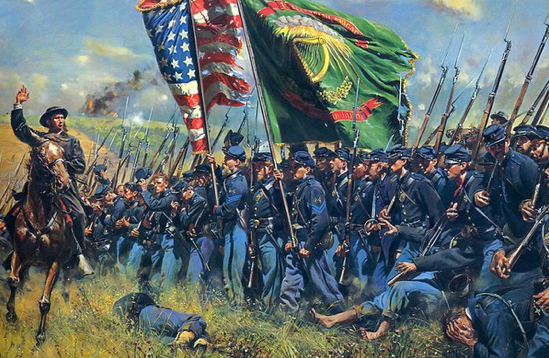
When we think of Christmas it is, I think, inseparable from the theme of struggle. Bob Cratchit and Tiny Tim knew much hardship and yet it is they, not Scrooge, who truly knew the spirit of Christmas. The brave Warriors that held the Front in WW1, likewise, knew intense suffering and yet also knew the spirit of Christmas, as in those heartening and heart-breaking moments when they played football with the ‘enemy’ in No Man’s Land.
I think nature epitomises what the human heart feels: the weather is cold and harsh. It rains frequently; the wind is sharp and icy, and the sky smothers us in a near-eternal grey. Trees die, and once-green fields turn to brown sludge. Everything that lives, struggles. That was always poignantly contrasted by Christmas, where we bring greenery, life, colour, light, and warmth into our houses: a beautiful consolation against coldness and bitterness. In a world that now only takes, we defy that tragedy in a season of giving; an enduring testament to the beauty, I think, inherent to the Human Spirit.
And yet, it is not enough to say that we are absent of enough struggle to truly feel Christmas. Indeed I think it not so – while there fortunately isn’t a world war on (yet) and though we be poorer, we are not yet as destitute as the Cratchits, there is most definitely struggle in this world – and plenty of it. People recount, as do I, that the year in aggregate has been pretty rubbish, and it was the same last year, and the year before that, and somehow none of it has given any resonance to Christmas.
The loss of hope
And so is it hope? I think that hope, too, is inseparable from Christmas – and maybe this has something to do with why it feels like it is dying now. Do any of us really believe anymore that a “Happy New Year” is genuinely what’s to come? Is it this that we are deprived of? Did the soldiers on the Front retain any belief in an end to the war? Did the Cratchits really believe their lot was going to improve, either? Or did they not? And was the more painfully beautiful thing to be found in the fact they rejoiced and celebrated anyway? That they were each kind in the face of a different sort of Hell, to people who had been unkind to them. The soldiers played with men that yesterday they shot at, and the Cratchits gave the gift of Christmas to a man who had banished it from his heart.
In my own reflections on the last couple of years, things just keep getting worse. It’s not that there is not occasion for delight or celebration within those years, but each one has been scored by the loss of a relative, by someone’s illness, by a decline of society along moral, economic and political lines, and by personal finances dwindling away, and yet more besides. We look to the next year in a state of worry: a country that becomes a worse place to live by the week, and the ever-present threat of a looming war all cast a dark cloud over naïve hope. I have changed the way I wish people well now; less often do I say “Happy New Year” as it begins to feel like a tone deaf platitude, and more “I hope that next year is kind to you.”
But hope is the other face of adversity and Christmas has it in abundance. The symbolism is not absent-minded: we choose the coldest season to celebrate warmth and the most dark days to celebrate with light. Christmas is a genuinely moving defiance of misery and defeatism; a triumph of human beauty in the face of hardship, something that even now in a world that genuinely feels ever-more hopeless, I still believe is ingrained in us all. Isn’t this the most deeply human thing of all?
A Stately Christmas:
On Monday, we went to Shugborough Estate, owned by the National Trust. Formerly the seat of the Anson family, famously of Admiral George Anson who defeated the Spanish off Cape Finisterre in 1747, famously then of the same Anson whose disastrous circumnavigation also earned him notoriety, and thence famously the residence of renowned Royal photographer Patrick Lichfield, Shugborough has some remarkable heritage. Unsurprisingly its ties to Naval history are of greatest appeal to me, but we went there on this occasion to see the estate decorated for Christmas.
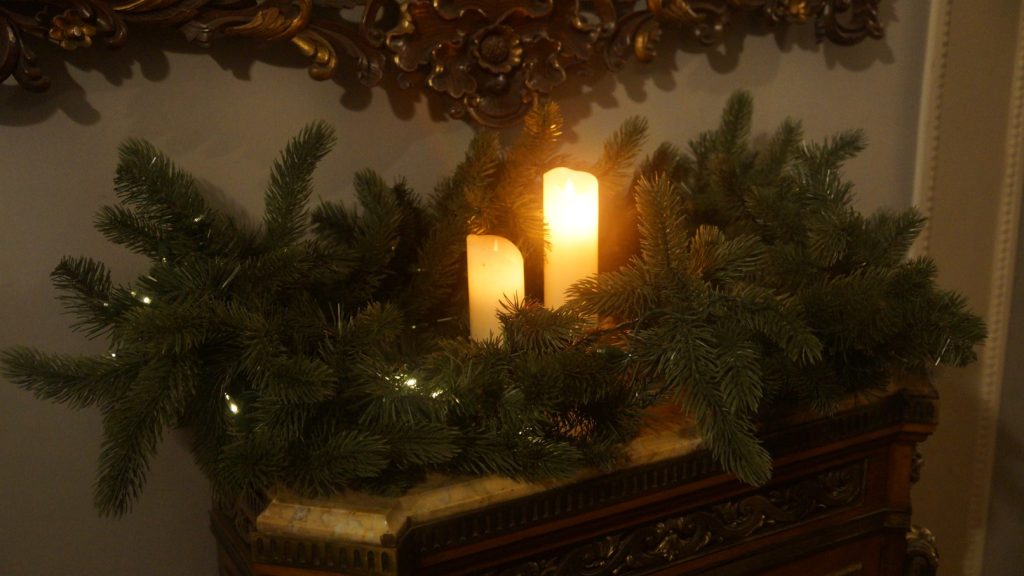
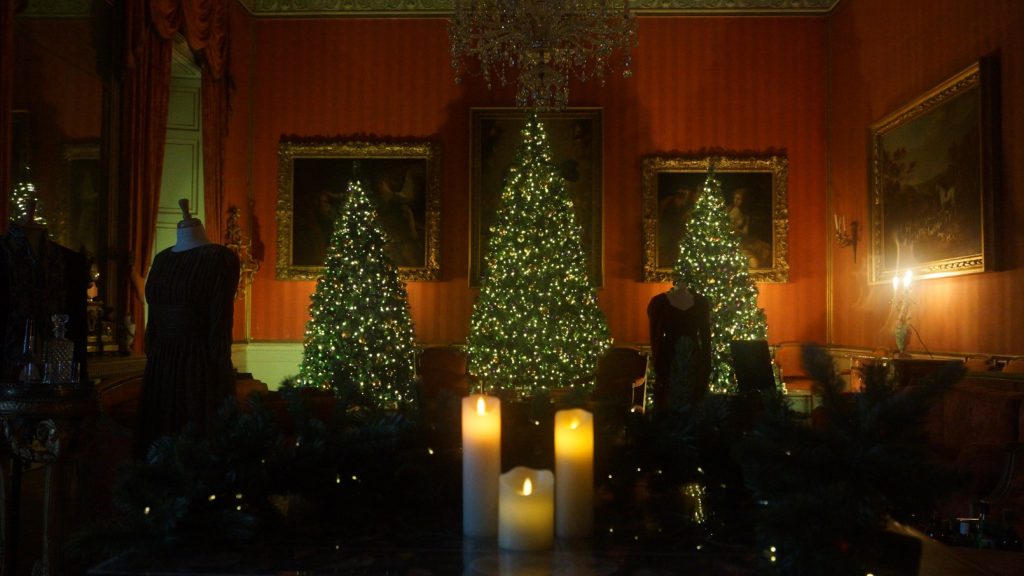
The contrast with my experience in Tesco was striking. Those vast halls never felt cold even in the bright light of day, but here under warm candlelight, with holly and ivy set about atop the cabinetry and dressers inside which nested gently flickering candles felt delightfully intimate. Scenes were arranged that told of a real life lived in these walls: a lovely reminder that what is now a public museum was once somebody’s home. And it felt like a home. A lady’s shoes rested on the floor of the drawing room, taken off familiarly in a state of relaxation – one tipped aside, and an empty bottle nearby telling of the occasion.
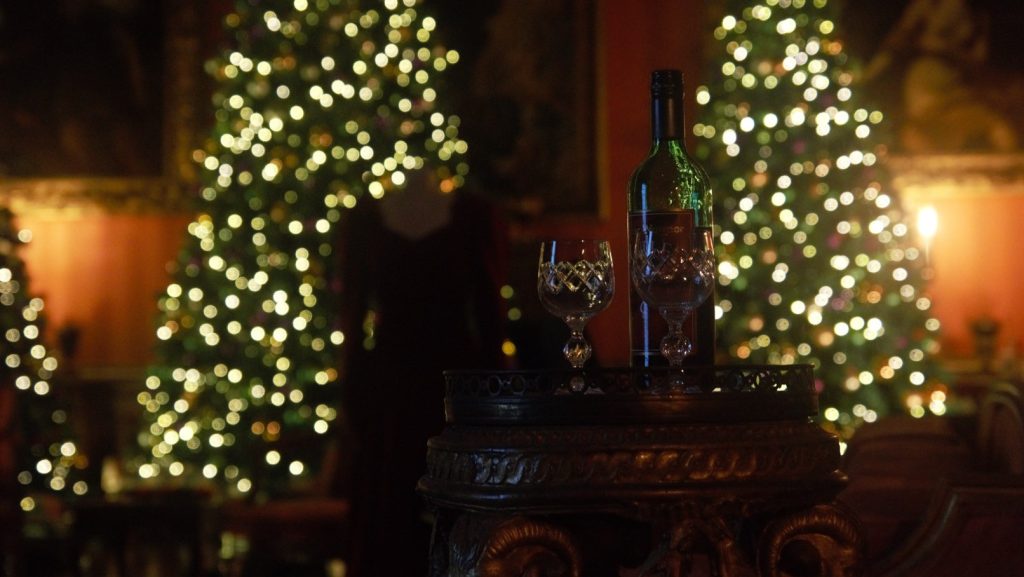
A crate of fine wine sat across the room; a couple stood off to the back, finely dressed, sharing a decanter in conversation. An old vinyl sung gently in the background, making the atmosphere but not dominating it. Trees stood along the wall, the deep green set beautifully against the red wallpaper, glowing warm light in harmony with the fire across the whole room.
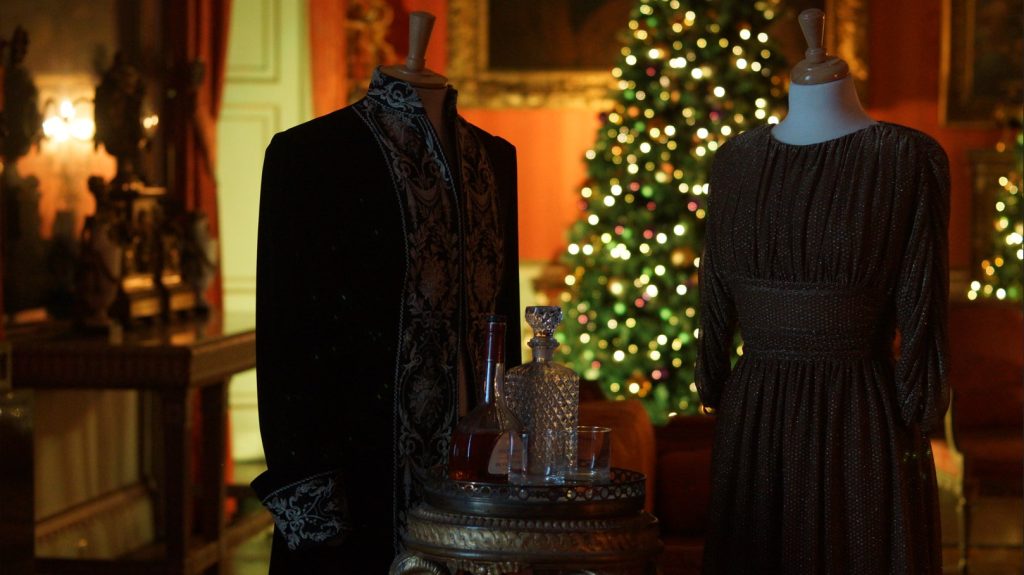
It was a scene that captured intimacy as much as history. The opposite in all the right ways to Tesco; one of cosy familiarity, of joviality, closeness and warmth. It had the soul of Christmas. I stood there as an observer to this familiar world and smiled. It was not my home, but it felt like home. It felt like Christmas.
It may seem obvious to remark on the difference between Shugborough and Tesco – one is a home and one is a shop – but I don’t think that distinction is as useful as the modern versus the old. Their world wasn’t sickeningly commercialised like ours, and human connection ran more deeply through society. Unlike the unmoored middle classes, the gentry were people of the land – a fact they shared with the poor, too – and saw it change over the seasons. They, too, battened down the hatches for winter; they too cuddled by the fire on the cold nights. They too shared the countryside and the customs of the country.
In this modern world we live like the middle or industrial classes, and it is a travesty. We work as if nothing changed. We wake in the dark, and grind until it is dark again. We spend more time with colleagues than family in a season intimately designed to encourage us to spend more time with the latter. We haemorrhage money we don’t have as the only way some of us seem able to express affection, losing the value of those quiet moments of togetherness. We rush at a time where everything else in nature slows; we work while nature sleeps; we panic and stress and flail about like we have completely lost ourselves, all in the pursuit of fundamentally commercial affairs – getting to the shops when the traffic isn’t too bad, posting things before the deadline for delivery, ordering things with enough time for them to arrive, and on it goes. We are completely out of step with nature.
What Killed Christmas Was Money
I think I have arrived at where I was going with this. Our lives aren’t thematically different from those of the soldiers on the frontline, or of the Cratchits. We are all pained by hardships of our own and we are united, if not by much else, though a common hope that things will genuinely get better. But many of us live culturally middle class lives, uprooted from our land, shut away in concrete boxes as unwilling but fixated participants to a pointless and yet necessary rat race. We are, except by the absence of iron chain, enslaved by corporations: those for whom we toil and those whom we pay for the privilege of experiencing what life offers for free. We are lost, and pay money helplessly so that our deadened souls might feel something; that we might briefly feel alive.
The only people who seem to truly know the feeling of Christmas now are the same people who always did: the wealthy, and the genuinely poor, who are both able to look into the eyes of other people and find Christmas in the connection between their two souls, and not printed on a receipt or credit card statement. They may be divided by class but they are not divided by their spirit: they both understand what so many today do not; Christmas is about people, not property.

It is a chance every year to remind us to correct our lives, and to remind us in a world dominated by assets to be more human. The true value of the Christmas season was you. It was always you.
Dearest reader, may you find yourself again, and feel the throws of life as the human spirit was meant to. I wish you well on your journey, and hope that we may meet again.
Have a wonderful Christmas, and I hope the New Year is kind to you.
May your soul be free.
Wishing you fair winds and a following sea,
Ephemeral Dawn. 🤍